
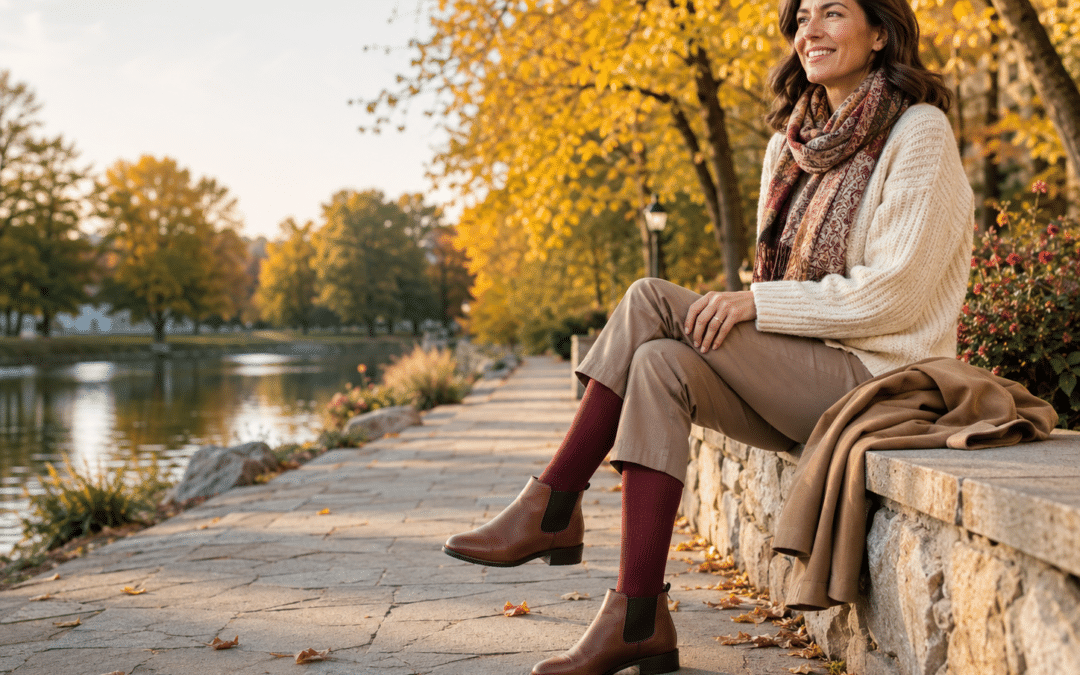
Cooler mornings, heavier layers, and a return to indoor routines all signal that fall has arrived. For many people managing swelling, edema, or lymphedema, this seasonal shift is a good moment to pause and check in on their compression routine — not because anything is necessarily wrong, but because so many small things change at once: temperature, activity levels, travel, clothing, and skin condition.
A change in temperature does not mean an underlying swelling condition has disappeared. Fall is simply a useful time for a compression “reset”: a quick check of fit, garment condition, comfort, and consistency before the busier holiday season begins.
Changing seasons can affect swelling management indirectly through temperature, activity, travel, skin condition, and clothing. Cooler fall weather may reduce heat-related swelling for some people, but it does not remove underlying causes. Continue following your prescribed compression plan, monitor changes, and contact a healthcare professional about new or worsening symptoms.
What You’ll Find in This Article
- Why cooler weather can hide swelling instead of resolving it
- How to check that your compression garment still fits as your fall routine shifts
- Tips for keeping your morning routine, skin care, and garment maintenance on track
- How to work fall colors and styles into a compression routine without compromising fit
- Warning signs that mean it’s time to call your care team, not just adjust for the season
Why Changing Seasons Can Change Your Swelling Routine
Cooler Weather May Feel Better But Swelling Can Still Be Present
There’s a real difference between seasonal comfort and medical improvement. As temperatures fall, heat-related swelling may become less noticeable. However, lymphedema, venous insufficiency, medication-related swelling, and other underlying causes don’t resolve just because the weather changed.
Rather than assuming everyone responds the same way, pay attention to your own pattern — time of day, activity, garment wear, travel, and any visible changes.
Less heat does not necessarily mean less need for compression.
Fall Often Brings a Change in Activity
Autumn typically shifts daily routines: a return to a desk, classroom, or longer indoor commute; less time walking outside as daylight shortens; long drives or flights for fall travel; and extended standing during events, cooking, or shopping.
Long periods of sitting, standing, and travel can contribute to foot and ankle swelling. Movement breaks and leg exercises may help support circulation, depending on your specific condition and care plan.
Heavier Clothing Can Hide Changes
Trousers, tall socks, boots, and layered clothing can make swelling less visible. Check the affected area directly rather than relying on how things look through clothing — watch for shoe tightness, sock marks, garment rolling, new pressure points, or differences between limbs. Ordinary clothing is never a substitute for medically prescribed compression.
Give Your Compression Routine a Fall Checkup
Confirm the Garment Still Fits Correctly
Ask yourself:
- Has the limb’s size or shape changed since the garment was fitted?
- Is the garment sliding, wrinkling, rolling, or bunching?
- Does it feel noticeably looser or harder to apply?
- Are there new marks, discomfort, numbness, or skin changes?
- Have you had a significant health, weight, mobility, or swelling change?
If any of these apply, it’s time for professional re-measurement. Compression garments come in different pressures and lengths, and proper measurement helps determine fit — this isn’t something to guess at alone. Our certified fitters can help assess whether your current garment still meets your needs.
Keep the Morning Routine Consistent
Put the garment on at the time recommended by your clinician, smooth out wrinkles rather than leaving folds, and never fold or roll the top to change the garment’s length — doing so can create a tourniquet effect. Many compression stockings are applied first thing in the morning, when leg swelling is generally lowest.
MedlinePlus advises applying compression stockings early in the morning and smoothing out wrinkles or bunching to ensure proper fit. A donning aid or gloves can help when hand strength or flexibility makes application difficult.
Inspect the Garment Before the Busy Season
Give your garments a quick audit: elasticity and compression feel, stretched or loose areas, runs or damaged seams, stains or product buildup, and care-label compliance. Also check whether you have a second pair available while one is being washed.
How to Make Compression Part of a Fall Wardrobe
Once the medically appropriate pressure, size, and garment style are established, color and styling can help compression feel like an intentional part of an outfit. Compression stockings come in different pressures, lengths, and colors, creating room for personal style without changing the prescribed function.
A Fall-Friendly Color Palette
| Compression Color | Fall Wardrobe Pairing | Style Direction |
| Black or charcoal | Black boots, gray trousers, structured coats | Minimal and polished |
| Navy | Denim, camel, cream, loafers | Softer alternative to black |
| Burgundy or plum | Knit dresses, chocolate brown, tweed | Rich seasonal accent |
| Olive or forest green | Tan, rust, denim, utility jackets | Earthy and casual |
| Brown or warm neutral | Camel coats, suede shoes, cream knits | Tonal fall dressing |
| Rust or copper | Navy, dark denim, brown leather | Intentional statement |
Styling by Garment Type
Knee-high socks: Pair with cropped trousers and loafers so the color looks intentional. Coordinate with a scarf, bag, or shoe detail; darker shades work well beneath business trousers, while a patterned pair can be the visual accent in a neutral outfit.
Thigh-high garments or tights: Style beneath midi skirts, sweater dresses, or wide-leg trousers. Choose a tone that blends with your footwear, and confirm other hosiery doesn’t create an unwanted constricting band over the garment.
Arm sleeves: Layer beneath lightweight knits or cardigans, coordinating with a shirt or scarf, and avoid cuffs that press tightly over the garment.
Be Thoughtful About Boots and Layers
Check that boots don’t feel tighter as the day progresses, and keep the garment smooth inside footwear. Avoid thick extra socks that change a shoe’s fit unless your care team has approved it, and never roll the top of a compression sock to fit it beneath a boot.
Fall Colors, Same Trusted Compression: Start with the compression level and fit recommended for you, then choose a shade that works with the clothes you already wear.
Support Swelling Management as Your Fall Schedule Changes
Schedule short standing or movement breaks during desk work, walk during calls when appropriate, and use clinician-approved leg movements during travel. Break up long car journeys when possible, and follow the individualized movement plan from your medical team.
The NHS includes compression, skin care, movement, and regular exercise among the main components used to manage lymphedema symptoms.
For travel and events, pack an extra garment when possible, bring any donning aids you rely on, keep garments clean and dry, and avoid waiting until the morning of a trip to test something new. Ask your clinician about travel-specific compression needs rather than increasing compression independently.
It also helps to track whether swelling is worse on office days versus home days, whether certain shoes become tight, and how the limb looks and feels before and after garment wear. That detail gives a clinician or fitter far more to work with than a vague report that swelling “seems different.”
Make Skin Care Part of the Fall Compression Routine
Check daily for dryness, redness, areas of rubbing, blisters, cuts, unusual warmth, or changes beneath garment bands. Healthy skin care matters because swollen skin may be more vulnerable to damage and infection.
Follow your care team’s skin-care instructions, and let moisturizer dry fully before applying compression — residue can make donning difficult or affect the fabric. Avoid fragranced or irritating products without checking they’re suitable for you.
When a Change in Swelling Is More Than Seasonal
Seek emergency care for: swelling with shortness of breath, or chest pain, pressure, or tightness.
Contact a healthcare professional promptly for: new or worsening swelling in only one leg; a swollen area that’s red or warm; fever; a sudden or unexplained increase in swelling; swelling that doesn’t respond to your care plan; or a garment that’s become markedly uncomfortable or no longer fits correctly.
These signs should never be attributed to weather or season without medical assessment.
This article provides general educational information and is not a substitute for individualized medical advice. Do not change your prescribed compression level, garment type, or wearing schedule without consulting the healthcare professional managing your condition.
Your Five-Minute Fall Compression Checklist
- Check your swelling pattern. Note any changes since summer.
- Inspect your garments. Look for stretching, damage, or loss of support.
- Review the fit. Arrange re-measurement when fit has changed.
- Refresh your routine. Plan for morning application, skin care, washing, and movement breaks.
- Choose your fall colors. Select medically appropriate garments that coordinate with your wardrobe.
- Know the warning signs. Don’t dismiss sudden or one-sided swelling as seasonal.
Function First, Style Included
Fall is a reminder to review your swelling patterns and compression habits — not a reason to pause a prescribed plan. Fit, pressure, and garment type come first; once those needs are met, color and styling can help compression feel like a natural part of your wardrobe.
Ready for a fall compression refresh?
Call us at (615) 583-2273 or visit CompressionCare.com to schedule your fall compression checkup.
Compression Care is located in Nashville, Tennessee, and serves the Continental U.S.
Frequently Asked Questions
Does cooler weather reduce leg swelling?
It may reduce heat-related swelling for some people, but cooler temperatures don’t resolve every cause of edema or lymphedema. Continue your prescribed plan and report meaningful changes to a healthcare professional.
Should I use a different compression level in fall?
Don’t change compression strength based on season alone, level should reflect your condition, circulation, fit, and clinician’s instructions.
Can I wear compression socks with fall boots?
Often, yes, provided the boot is roomy enough and the garment stays smooth without pinching or bunching. A boot that becomes tight should be reassessed.
What compression colors work best with fall clothing?
Black, charcoal, navy, burgundy, olive, brown, and warm neutrals pair easily with denim, knitwear, trousers, and boots.
Why are compression stockings often put on in the morning?
Leg swelling is commonly lowest early in the morning, which may make the garment easier to apply. Follow the schedule from your prescribing clinician.
How often should compression garments be replaced?
Many compression stockings are replaced every three to six months, but follow product instructions and your clinician or fitter’s guidance.