
The final months of the year bring a familiar kind of pressure to compression therapy clinics. Patients are trying to use available benefits before their benefit year resets, holiday closures shorten the ordering calendar, and custom garments require additional production time that doesn’t pause for the season. Meanwhile, your team is still balancing new referrals, routine reorders, documentation, and the everyday patient questions that never stop coming.
Delayed orders don’t just create administrative headaches, they can interrupt compression therapy or leave patients relying on worn, ineffective garments through the holidays. At Compression Care, we’ve found that a proactive year-end ordering strategy helps clinics reduce last-minute scrambling, improve patient communication, and keep more patients on track with their care. The Compression Care Portal serves as a central place for organizing referrals, patient information, orders, communication, and follow-up, making this entire process far more manageable.
What You Will Find in This Article
- Why early planning matters for benefit deadlines and holiday shipping timelines
- How to review and prioritize your patient compression garment reorder list
- A backward-planning calendar to keep your clinic on schedule
- How the portal centralizes communication, orders, and follow-up
- A year-end checklist and common mistakes to avoid
Why Clinics Should Begin Year-End Planning Early
Benefit-Year Deadlines Can Affect Patient Decisions
Coverage, deductibles, replacement eligibility, and prior authorization requirements vary significantly by patient and plan. Not every patient has the same January 1 reset, and assuming otherwise can lead to confusion or missed opportunities. Clinics should verify individual coverage and replacement eligibility for each patient, clearly explain that coverage isn’t guaranteed until benefits are reviewed, and help patients understand both covered and self-pay options.
Holiday Schedules Compress the Ordering Timeline
Year-end timing is affected by clinic closures, manufacturer holiday schedules, custom garment production times, carrier delays, and limited appointment availability. Additional time is often needed for prescriptions or clinical documentation as well. Additional time may also be needed to obtain prescriptions or complete clinical documentation.
Worn Garments Can Compromise Continuity of Care
Patients shouldn’t wait until a garment is completely unusable before starting a reorder. Watch for warning signs including loss of elasticity or compression, garments slipping or rolling, stretched fabric, damaged seams, persistent odors or staining, changes in fit, or increased swelling while wearing the garment.
Start With a Portal-Based Patient Reorder Review
Rather than relying on memory, paper notes, or scattered staff inboxes, use your portal workflow to build a clear year-end patient list.
Identify Patients Who May Be Due for a Reorder
Review patients based on previous order dates, expected replacement schedules, current treatment plans, recent swelling changes, upcoming appointments, previous returns or exchanges, unresolved fit concerns, and patients who postponed an earlier reorder.
Segment Patients by Urgency
Priority 1: Immediate attention– garments are damaged or no longer effective, there’s a significant fit problem, or a prescription/authorization is close to expiring.
Priority 2: Reorder due soon– the patient is approaching the normal replacement window and documentation is already available.
Priority 3: Follow-up or education needed– the clinic hasn’t reached the patient, updated measurements are needed, or coverage information is incomplete.
Review Each Record for Missing Information
Before moving forward, confirm current contact information, shipping address, garment type and size, compression level, color and quantity, prescription requirements, clinical documentation, and coverage details.
Build a Year-End Ordering Calendar by Working Backward
Base your clinic calendar on the desired delivery date—not simply the date an order is submitted.
Early fall: Review and organize. Assemble your patient reorder list, review prior replacement timing, identify custom garment patients, confirm manufacturer and carrier lead times, and assign staff responsibilities.
Mid-fall: Begin patient outreach. Contact patients who may be due for replacement, schedule measurements, request missing documentation, and begin benefit verification.
Before the holiday period: Finalize priority orders. Confirm all details, submit complete orders early, and follow up promptly on any requested information.
Final weeks of the year: Manage exceptions. Focus on orders that can still be completed accurately, communicate realistic expectations, and document unresolved items for January follow-up.
Important: Publish current clinic, manufacturer, and carrier cutoff dates separately each year. Do not rely on previous-year deadlines.
Help Patients Make Informed Use of Their Remaining Benefits
Verify rather than assume. A patient may have remaining benefits, but benefit-year dates, deductible status, coinsurance, replacement frequency, quantity limits, and prior authorization requirements all affect actual coverage. Use careful language such as “we can review your available options” or “coverage depends on your individual plan” rather than making promises before verification is complete.
Present covered and self-pay options clearly when a preferred product isn’t covered, coverage limits fall short of the clinical recommendation, or the patient wants to order before authorization is finalized. Keep clinical recommendations separate from coverage limitations, the recommendation should reflect the patient’s actual needs, with coverage information helping them decide how to obtain it.
Plan Clinic Inventory Without Overordering
Review previous ordering patterns to identify common garment categories, frequently requested compression levels, and high-volume accessories. Custom garments, uncommon sizes, and specialized products should generally be tied to confirmed patient needs rather than speculative stocking. Prepare a contingency plan by knowing which products have longer lead times, what alternatives exist, and how backorders will be communicated to patients.
Use the Compression Care Portal to Centralize the Workflow
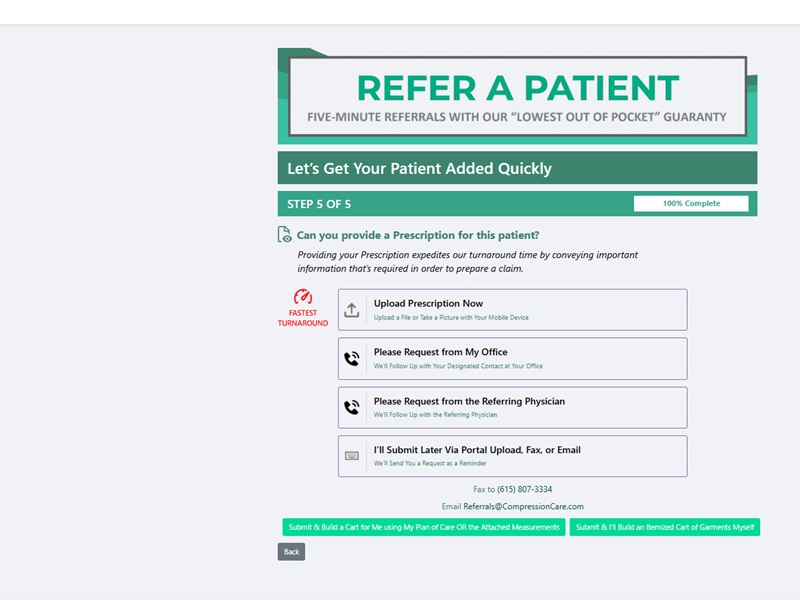
A centralized portal reduces fragmented communication by organizing referrals, patient records, product selections, documentation, order progress, and follow-up activities in one place.
Review portal activity regularly for incomplete referrals, missing documentation, orders awaiting patient action, and shipping or delivery updates—catching issues before they become urgent. Use messaging and notes so any team member can see when a patient was contacted, what’s still needed, and who owns the next step.
When patients report fit concerns, record details clearly, respond quickly, confirm return or exchange instructions, and track resolution. Finally, don’t let the workflow end at shipment, record an estimated follow-up or replacement date so the next reorder cycle begins before garments wear out.
Prepare for Shipping Cutoffs and Delivery Challenges
Submitting an order before a deadline doesn’t guarantee delivery by a specific date. Timing depends on order completeness, benefit verification, product availability, custom production, and shipping method. Verify recipient name, full address, phone number, and whether the clinic or patient should receive the shipment before submission. Set realistic expectations by explaining the processing sequence and how holiday volume may affect timing.
Create a Consistent Patient Outreach Campaign
Because patients may overlook a single message, use a sequence: initial portal message or email, follow-up phone call, text reminder where permitted, a final reminder before your internal deadline, and January follow-up for anyone who didn’t complete the process.
Year-End Compression Ordering Checklist
- Patient review: Identify patients due for replacement, confirm contact and shipping information, review previous fit notes, and confirm current clinical needs.
- Documentation and benefits: Confirm prescriptions, gather clinical documentation, review benefit-year timing, and discuss estimated patient responsibility.
- Ordering: Confirm product, size, compression level, and quantity; submit complete information through the portal; track order and shipping status.
- Follow-up: Confirm delivery, ask about fit and comfort, address returns promptly, and set the next reorder reminder.
What to Do After the Year-End Rush
January is the time to follow up with patients whose orders weren’t completed, review delayed or returned orders, identify common documentation problems, and evaluate which outreach methods worked best. Because compression therapy plays an important role in the ongoing management of lymphedema and venous conditions, closing gaps in treatment early can help keep patients on track rather than waiting until the fourth quarter.
Frequently Asked Questions
When should clinics begin planning year-end compression garment reorders?
Clinics should begin several months before their internal deadline, especially for patients needing new measurements, prescriptions, authorizations, or custom garments.
Do all insurance benefits reset on January 1?
No. Benefit periods and replacement rules vary by plan. Clinics and patients should verify the individual plan rather than assuming a calendar-year reset.
How can a portal help manage compression garment reorders?
A centralized portal organizes patient information, documentation, referral submission, order tracking, communication, and follow-up reminders in one place—reducing the risk of items falling through the cracks during a busy season.
What information should be confirmed before submitting a reorder?
Confirm current measurements, product details, compression level, quantity, prescription requirements, shipping address, and coverage information.
Are custom compression garments subject to longer lead times?
Yes. Custom products may require additional review and manufacturing time, making early planning particularly important.
What happens if a patient misses a year-end shipping cutoff?
The order may still proceed, but processing or delivery could occur after the desired date. The clinic should communicate updated expectations and verify whether benefit timing affects the patient.
How often should compression garments be replaced?
Replacement timing depends on garment condition, clinical use, manufacturer guidance, care practices, and coverage rules. Patients should be assessed individually rather than relying only on a fixed calendar.