
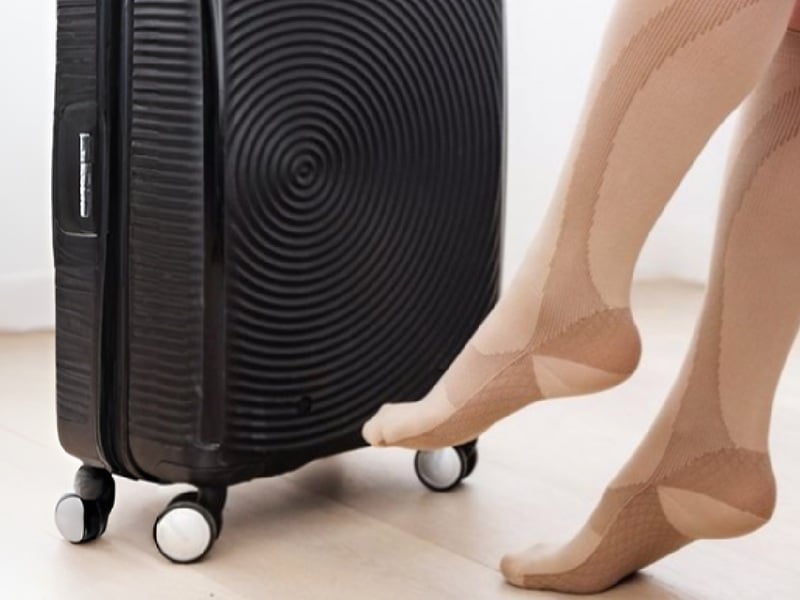
Summer usually means packed suitcases, long drives, airport queues, and finally—some time away. But if you’re managing lymphedema, venous insufficiency, lipedema, or ongoing swelling, travel can feel less like a break and more like something you need to carefully plan around.
Hours of sitting, warmer weather, and changes in cabin pressure can all affect how fluid moves through your body. It’s common to land from a flight or step out of a car and notice your legs or arms feeling heavier, tighter, or more swollen than usual.
The goal isn’t to avoid travel—it’s to travel in a way that keeps your body supported. That’s where compression therapy becomes part of your routine, not an afterthought.
What You’ll Learn in This Article
- Why swelling tends to worsen during travel
- How compression garments support circulation on the go
- What to pack so your routine stays consistent
- Simple ways to stay comfortable during long trips
- When it makes sense to speak with a specialist before traveling
Why Travel Can Increase Swelling
Think about what travel actually looks like. You’re seated in a confined space—maybe a window seat, maybe a long car ride—with very little movement for hours at a time. Your muscles aren’t doing much work, which means they’re not helping push fluid back up through your system.
At the same time, a few other things are happening:
- Cabin pressure during flights slightly alters circulation
- Warm temperatures cause blood vessels to expand
- You may not be drinking enough water
- Movement is limited for long stretches
Put together, these factors slow circulation and make it easier for fluid to collect in the lower body.
As explained in the CDC’s guidance on blood clots during travel, long periods of sitting can reduce blood flow significantly—especially in the legs—raising the risk of both swelling and clot formation.
Why Compression Matters During Travel
Compression garments work with your body when movement is limited. Instead of relying only on muscle activity, they apply consistent, graduated pressure that helps keep fluid moving in the right direction.
In practical terms, that means:
- Less pooling of fluid in the legs or arms
- Reduced feeling of heaviness or tightness
- Better circulation during long periods of sitting
- More stability in your condition while away from home
If you’ve ever finished a long journey and immediately noticed swelling, you’ve already experienced what happens without that support.
Medical insight from the Cleveland Clinic’s overview of edema explains how fluid builds up when circulation slows—exactly what tends to happen during travel.
If you’re unsure about which compression level or type is right for you, it’s worth getting guidance before your trip rather than adjusting mid-journey.
What Compression Garments Should You Pack?
Packing for travel is already a process. When compression is part of your routine, it becomes even more important to be intentional about what goes into your bag.
If you’re unsure whether to carry day garments, nighttime options, or custom pieces, it helps to understand how different types of compression are used. This guide on choosing the right compression garment (day vs night, custom vs off-the-shelf) breaks it down clearly so you can pack with confidence.
Your Everyday Compression
Start with what you wear regularly:
- Compression stockings
- Arm sleeves
- Wraps
- Custom garments
Bring at least one extra pair. Travel days can be long, and having a backup saves you from having to compromise your routine.
If you need to refresh your current setup before traveling, you can explore options on CompressionGURU.com and make sure you’re starting your trip with garments that still fit and perform properly.
Nighttime or Alternate Compression
If you usually switch to a different garment at night, don’t skip it just because you’re traveling.
It’s easy to think one night won’t matter—but skipping compression overnight can lead to noticeable swelling the next day, especially after a long journey.
Tools That Make It Easier
Applying compression in your own space is one thing. Doing it in a hotel room or small bathroom is another.
A few simple tools can make a big difference:
- Donning aids
- Grip gloves
- Silk slips
They take up very little space but save time and effort when you need it most.
Skin Care Matters More Than You Think
Travel exposes your skin to new environments—dry airplane air, heat, different water, and longer wear times for garments.
Keeping your skin in good condition helps prevent irritation and makes compression more comfortable.
Bring:
- A gentle cleanser
- A reliable moisturizer
- A barrier cream if you use one
If you’re traveling in warmer or humid conditions, it’s especially important to adjust your routine. This guide on protecting your skin under compression garments in hot and humid weather offers practical tips to help you avoid common issues while staying comfortable.
Travel Tips for Staying Supported
Move When You Can
You don’t need a full workout—just regular movement.
- Stand up and walk during flights when possible
- Take breaks every 60–90 minutes during road trips
- Rotate your ankles and stretch your legs while seated
Even small movements help keep fluid from settling.
Stay Hydrated (Even When It’s Inconvenient)
It’s easy to drink less water when you’re traveling—especially on flights—but dehydration makes circulation less efficient.
Keep a bottle with you and sip consistently, even if it means more aisle walks.
Elevate Once You Arrive
After a long travel day, give your body a chance to reset.
- Elevate your legs or arms when resting
- Take time to decompress before heading out again
This helps reduce any fluid buildup from the journey.
Wear Compression Before You Need It
One of the most common mistakes is waiting until swelling starts.
Instead:
- Put your compression garments on before your journey begins
- Keep them on throughout travel
- Remove them once you’ve settled and can move freely
This keeps things under control from the start rather than reacting later.
Planning Ahead Makes Travel Easier
A little preparation goes a long way.
Before your trip:
- Check that your garments still fit properly
- Replace anything that feels loose or worn
- Pack extras in your carry-on
- Keep any necessary medical information accessible
If you’re unsure whether your current setup will hold up during travel, getting advice from Compression Care can help you avoid last-minute issues.
When It’s Worth Speaking to a Professional
Some trips need more planning than others.
Consider getting guidance if:
- You’re taking a long-haul flight
- You’ve had swelling issues during past trips
- Your current garments aren’t as effective as they used to be
- You’re unsure about compression levels
A quick consultation can make your entire trip more comfortable.
Travel Should Feel Good—Not Like a Setback
Managing swelling doesn’t mean you have to limit where you go. It just means traveling with the right support in place.
With compression as part of your plan—not something you figure out along the way—you can stay comfortable, active, and focused on the reason you’re traveling in the first place.
Need Help Getting Travel-Ready?
If you want to make sure you’re using the right compression setup before your next trip, getting expert input can save you time and discomfort later.
Reach out through the Compression Care contact page and get guidance tailored to your needs.